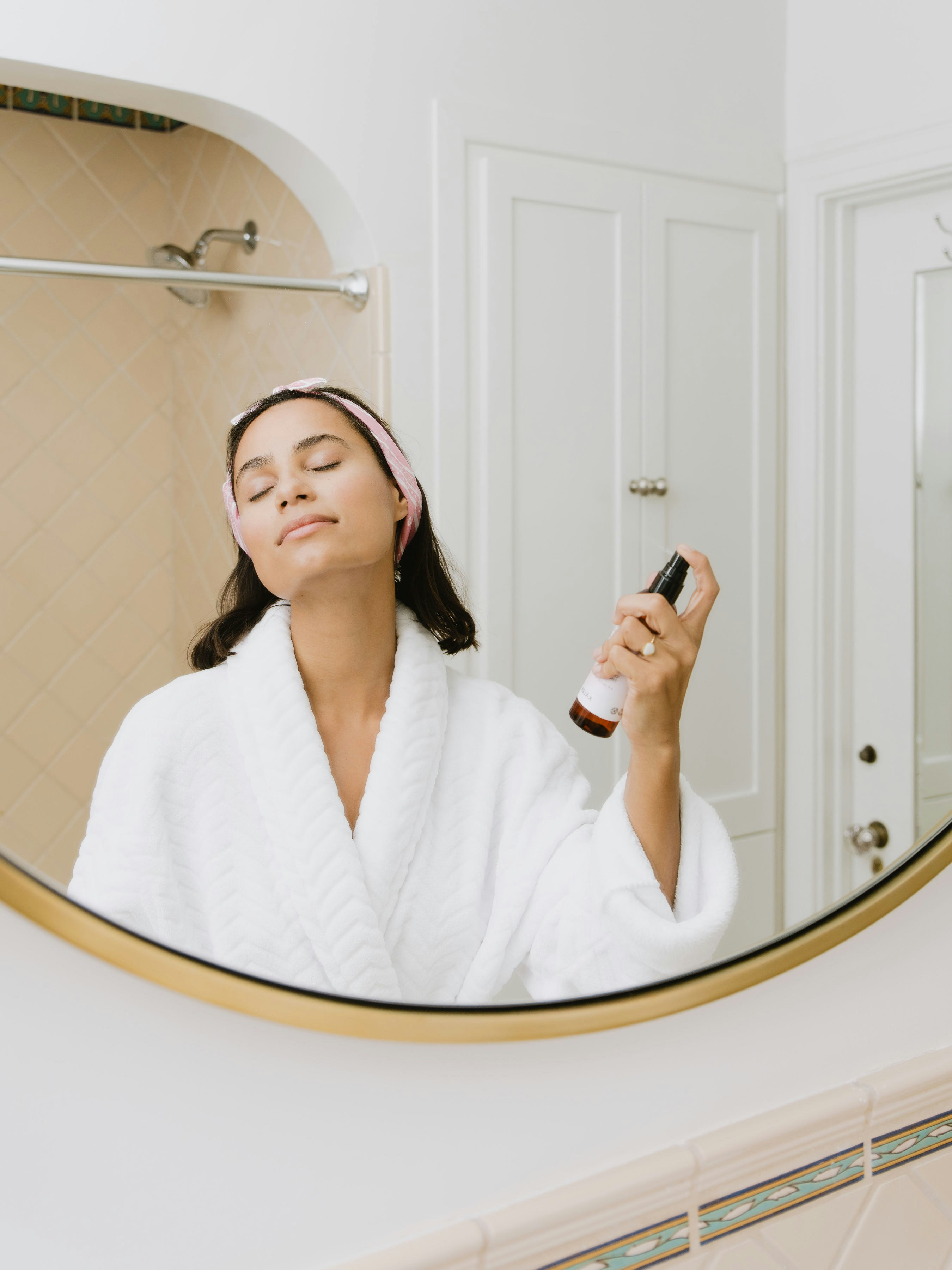
Sensitive skin and dry skin tend to appear together more often than not, and fragrance is one of the more common reasons a product that looks well-suited on paper still causes a reaction. For skin that is already reactive or struggling to hold on to moisture, fragrance introduces risk without offering anything in return. It is added to skincare for sensory appeal and to mask the smell of functional ingredients, not because it improves what a product does. For many skin types that is a perfectly acceptable trade-off. For sensitive or dry skin, it tends not to be.
The connection between dry skin and sensitive skin
They share more than a passing resemblance. Both are often rooted in the same underlying issue: a moisture barrier that is not quite functioning as it should.
The moisture barrier is the outermost layer of skin, and its role is to keep water in and prevent irritants from getting through. When it is working well, skin feels settled and comfortable. When it is compromised, skin loses moisture more quickly, feels tight or reactive, and becomes more permeable to the kinds of ingredients that it would otherwise block, including fragrance. Dry skin loses water through this weakened barrier; sensitive skin reacts because the same barrier is letting irritants in. The ingredients that support one tend to support the other, which is why the recommended approach for both skin types overlaps so closely.
It is also worth knowing that natural fragrance is not a gentler alternative to synthetic. Essential oils, citrus extracts, and botanical fragrance compounds are just as capable of causing irritation on reactive skin. The origin of an ingredient is not a reliable guide to how sensitising it may be.
Ingredients that research points to for sensitive, dry skin
Ceramides
Ceramides are lipid molecules that occur naturally in the skin's barrier, where they play a central role in keeping it intact. When the barrier is compromised, ceramide levels are often depleted, and replenishing them through skincare is associated with a calmer, more comfortable-looking complexion over time. Ceramides are among the ingredients that reached dermatologist consensus for dry skin in the JAAD 2025 Delphi study, a rigorous two-round expert review in which 62 dermatologists across 43 centres assessed the evidence behind hundreds of candidate skincare ingredients. On an ingredient list, ceramides appear as ceramide NP, ceramide AP, ceramide EOP, or simply ceramide.
Hyaluronic acid
A humectant that draws water toward the skin's surface and helps it stay there, hyaluronic acid is one of the most widely used and consistently well-tolerated cosmetic actives available. It also reached consensus in the JAAD 2025 study for dry skin. Sodium hyaluronate, which often appears alongside it on ingredient lists, is a salt form of the same molecule and performs the same function.
Urea
Urea tends to be underestimated, partly because the name reads as clinical rather than appealing. At the concentrations used in cosmetic skincare, typically under 10%, it functions as both a humectant and a gentle exfoliant, associated with a smoother-looking skin surface and a reduction in the tight, rough feeling that often accompanies dry skin. It reached consensus in the JAAD 2025 study for dry skin and suits reactive skin types well at these lower strengths.
Petrolatum
One of the most effective occlusive ingredients in skincare, with a long and well-documented safety record. Unlike humectants, occlusives do not add water to the skin — they slow moisture loss by forming a protective layer on the surface. Used as a final step in an evening routine, petrolatum is particularly useful for skin that feels very dry or reactive, and it is naturally fragrance-free. It reached consensus in the JAAD 2025 study for dry skin.
Panthenol
Panthenol, or provitamin B5, does not appear in the JAAD 2025 consensus list but has a strong body of cosmetic research behind it and is one of the most consistently well-tolerated ingredients in skincare formulation. It is associated with a more comfortable, less reactive-looking skin surface, and it appears frequently in products designed with sensitivity in mind.
Other ingredients worth approaching with care
Beyond fragrance, a few things are worth being aware of for skin that is both dry and reactive.
Alcohol denat., when it appears high on an ingredient list, can be drying and irritating for sensitive skin. It is common in some toners and essences. If a product leaves skin feeling tight or uncomfortable immediately after use, it is worth checking where alcohol sits on the formula.
High concentrations of exfoliating acids, including AHAs and BHAs, are not the place to start when the barrier is already compromised. These actives have genuine value for many skin types, but introducing them before the barrier is stable tends to worsen dryness and reactivity rather than improve texture.
Certain botanical extracts, particularly citrus, mint, and many essential oils, are worth treating with the same scepticism as synthetic fragrance. They appear in products positioned as gentle or natural, but for reactive skin the marketing context does not reliably predict the formula's behaviour.
A sensible routine for sensitive, dry skin
For this skin type, a shorter routine with well-chosen ingredients is almost always more effective than a longer, more complex one. Fewer products means fewer variables and a clearer picture of what your skin is actually responding to.
A gentle, fragrance-free cleanser is the foundation — after cleansing, skin should feel comfortable. If it feels tight or stripped, the formula is likely too harsh for this skin type.
A hydrating serum or essence with hyaluronic acid or panthenol, applied to slightly damp skin, draws and holds moisture at the surface. A fragrance-free moisturiser with ceramides, applied over the serum, supports the barrier and slows water loss. In the evening, a small amount of petrolatum or a ceramide-rich balm as the final layer is useful if skin is very dry or reactive.
Mineral SPF in the morning, based on zinc oxide or titanium dioxide, tends to be better tolerated on sensitive skin than chemical filters.
When adding anything new to a sensitive skin routine, introducing one product at a time and waiting a week or so before adding the next gives a more reliable picture of what agrees with your skin.
Dewi helps you find skincare based on ingredient evidence. It is not medical advice. If a skin issue is persistent, painful, or getting worse, it is worth seeing a doctor.